We've sent you an email with a link to update your password.
Reset your password
We will send you an email to reset your password.
Protein, Plants and Everyday Life: A Simpler Way to Think About Nutrition
Say the word "protein" out loud to most people, and a fairly predictable image shows up. A gym. A shaker bottle. Someone mid-set, counting reps. Maybe a fitness influencer explaining their macros to camera.
It's an odd thing, when you think about it. Protein isn't a gym invention. It's been on our plates for as long as we've been eating dal, paneer, eggs, beans, and a hundred other everyday foods. Somewhere along the way, though, the conversation around it got narrower. It became a performance metric before it stayed a plate of food.
This piece isn't about undoing that association — fitness nutrition has its place, and there's nothing wrong with thinking about protein while training. It's about widening the lens a little. Because for most of us, most of the time, protein isn't about performance at all. It's just about eating well.
Why Does Protein Feel Like a "Gym" Conversation?
A lot of this comes down to where the conversation has lived for the past decade or so. Protein shakes, sports nutrition brands, muscle-building content, pre- and post workout routines — these have dominated how protein gets talked about, especially online. Fitness influencers built entire audiences around it. Supplement aisles are organised around it.
None of that is a bad thing on its own. But when almost every visible conversation about protein is tied to workouts and muscle, it quietly sends a message to everyone else: this topic is for a certain kind of person, doing a certain kind of activity. If you're not lifting weights or training for something, protein can start to feel like it's simply not about you.
That's the gap worth naming. Not that fitness-focused protein content is wrong, but that it's become so loud it has crowded out a much older, much simpler conversation the one about food.
Lentils, beans, soy, and nuts have provided accessible protein for generations.
Protein Was Never Just for Athletes
Protein is one of the basic macronutrients, alongside carbohydrates and fats, and it shows up naturally across a wide range of everyday foods — lentils, beans, dairy, eggs, soy, nuts, whole grains, and more. It's part of a balanced diet, full stop, regardless of whether that diet includes a training schedule.
It's also woven into dietary patterns that have nothing to do with fitness culture. Vegetarian thalis built around dal and paneer. Plant-forward diets built around legumes and grains. These patterns have existed for generations, long before "protein content" became a label on a packet.
None of this is about specific numbers or targets — how much protein any individual needs varies by person, and that's genuinely worth discussing with a doctor or nutritionist if you're curious about your own requirements. What's worth taking away here is simpler: you don't have to be working out to have a reason to think about your protein intake. It's already part of the food most of us eat, whether we notice it or not.
What Does Protein for Everyday Life Actually Mean?
Strip away the language of optimisation — maximum output, muscle gain, pre-workout timing — and what's left is something much more ordinary.
It's the protein in the eggs at breakfast, or the moong dal at lunch. It's remembering to add a side of curd, or choosing a paneer sabzi over something lighter on a busy weeknight. It's a working professional grabbing a quick, protein-inclusive meal between back-to-back calls instead of skipping lunch altogether. It's a family dinner where the dal is as much a fixture as the rice.
Everyday protein isn't about hitting a number. It's about paying a bit more attention to what's actually on the plate, across the meals people already eat, in the routines they already have. That's a very different starting point from "how do I maximise my protein for muscle growth" — and for most people, it's the more relevant one.
Where Does Plant Protein Fit In?
Plant protein simply refers to protein that comes from plant sources rather than animal ones. It's not a single ingredient or a single food — it's a category that includes pulses, lentils, beans, soy, peas, and various nuts and seeds, each with its own taste, texture, and place in a meal.
None of these sources need to compete with each other for a title of "best." They're different tools for a similar purpose, and most plant-forward diets — vegetarian or otherwise — end up drawing from several of them across a week, not just one.
Plant protein also isn't inherently superior to animal protein, and it isn't automatically the right choice for every person or every dietary need. It's simply one more way to think about protein within an everyday, plant-based approach to eating — useful for people who already lean vegetarian, and equally relevant for anyone looking to add more plant forward meals into a mixed diet.
Explore Everyday Plant Protein
Looking for a simple, approachable way to include plant-based protein in your routine?
If protein has an image problem, it's this: the mental picture rarely includes most of the people actually eating three meals a day.
Homemakers often spend a good part of the day thinking about what everyone else in the house is eating — what the kids need, what's easy to cook, what will get finished without complaints. It's not unusual, in the middle of all that planning, for a person's own plate to become an afterthought. That's not a flaw in anyone's routine; it's just how a lot of households run. But it does mean protein, like a lot of self-care, can slip down the priority list without anyone quite deciding that it should.
Working adults know the particular chaos of back-to-back meetings, long commutes, and days that don't leave much room for thinking about meals in advance. Consistency is harder to maintain than intention — most people don't need convincing that protein matters, they need meals that are actually realistic to put together on a Tuesday.
Older adults think about food in the context of a whole life stage, not just a single goal. Nutrition remains relevant here as it does at any age, though specific needs can vary quite a bit from person to person. This is genuinely a conversation worth having with a doctor or nutritionist rather than a generic article — general information isn't the same as personalised advice.
People who don't exercise regularly are, if anything, the clearest example of the point. Not training for a marathon or lifting weights doesn't make what's on your plate irrelevant. Everyday nutrition doesn't have a fitness prerequisite.
Moving Away From Complicated Nutrition Conversations
Somewhere between all the conflicting advice, the rules, the "optimisation," and the pressure to eat with textbook precision, nutrition stopped feeling like something ordinary people could just do. It started to feel like a project — something requiring the right app, the right plan, the right level of discipline.
That's a lot of weight to put on something as basic as eating. Good nutrition doesn't require an elaborate system. It can start with understanding a few basics and building habits that are realistic enough to actually stick — not because nutrition itself is simple in every respect, but because the conversation around it doesn't need to be as complicated as it's become.
Building Simple, Consistent Nutritional Habits
None of this calls for extremes. It's less about overhauling how you eat and more about small, repeatable choices:
Paying a little more attention to what's actually on your plate
Including a protein source in regular meals, not just "special" ones
Exploring plant-based protein options like dal, beans, or soy alongside familiar staples
Building meals around some variety rather than the same two dishes on rotation
Choosing habits you can realistically keep up, rather than ones that only work for a week
There's no single trick here, and nothing that promises to transform anything overnight. Just the ordinary, unglamorous work of building habits that hold up over time.
RevaSure's Perspective
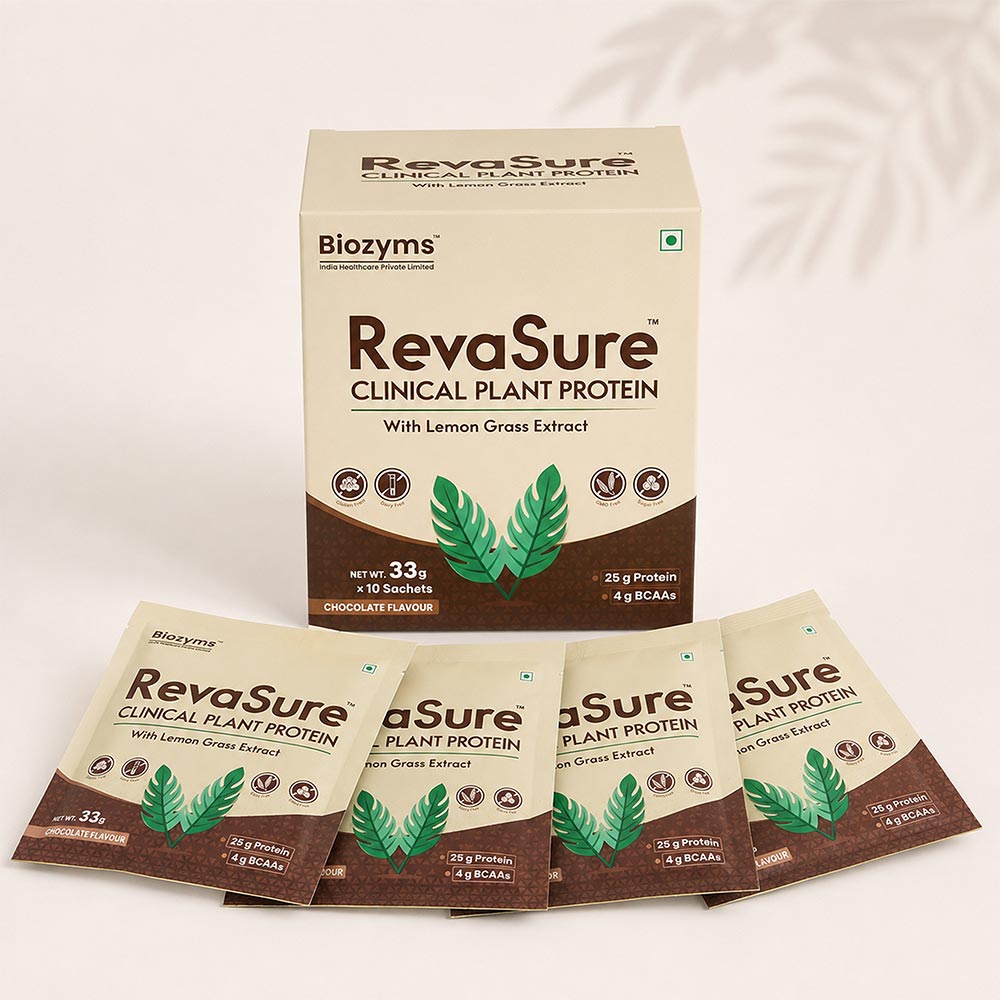
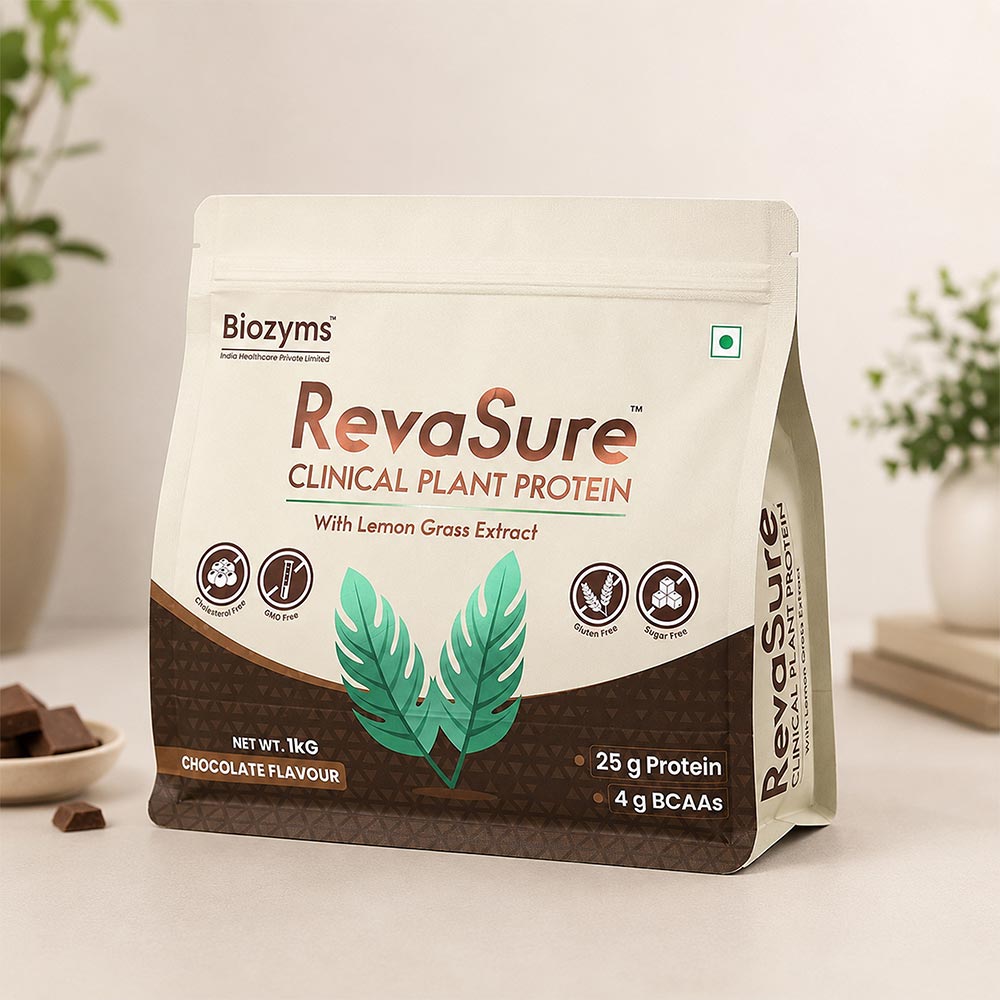
This is roughly the question RevaSure starts from: what if protein could be part of everyday nutrition without requiring someone to become a fitness enthusiast first?
That question shapes how the brand thinks about plant protein — not as a performance tool aimed at a narrow audience, but as something that can sit comfortably in an ordinary day. RevaSure's interest is in making plant-based protein feel approachable and relevant, whether the person reaching for it trains five times a week or hasn't set foot in a gym in years. The aim isn't to sell a lifestyle. It's to make plant protein feel like a reasonable, understandable part of everyday eating — no different, in spirit, from adding an extra spoon of dal to your plate.
Nutrition Doesn't Begin in the Gym
It's worth returning to where this started. Protein got tangled up with gym culture somewhere along the way, but it never actually belonged to it exclusively. It was always part of ordinary meals, ordinary routines, ordinary choices.
Nutrition doesn't begin in the gym. It begins with what ends up on your plate on an unremarkable Tuesday. It begins with the habits you build without making a big production of them. It begins in the everyday — which is exactly where protein, plant based or otherwise, has quietly belonged all along.
Is protein only important for people who exercise?
No. Protein is a macronutrient found in many everyday foods and is part of a balanced diet regardless of activity level. People who don't exercise regularly still benefit from including protein-rich foods as part of their overall diet.
What is plant protein?
Plant protein refers to protein derived from plant sources such as pulses, lentils, beans, soy, peas, nuts, and seeds, rather than from animal sources like meat, dairy, or eggs.
What are common vegetarian protein sources?
Common vegetarian protein sources include dal and other lentils, beans, chickpeas, paneer, dairy, soy products like tofu, and nuts and seeds. Eggs are also a protein source for vegetarians who include them in their diet.
Can plant protein be part of everyday nutrition, not just fitness diets?
Yes. Plant protein sources like lentils, beans, and soy have long been part of everyday vegetarian and plant-forward diets, independent of any fitness or training goal.
How can someone include more protein in their everyday diet?
Simple approaches include adding a protein source like dal, beans, curd, or paneer to regular meals, choosing some variety across the week, and building consistent, realistic habits rather than following restrictive rules. Anyone with specific dietary or health considerations should consult a qualified healthcare or nutrition professional.