If you've come across a plant protein with lemongrass in the ingredient list and paused for a second, that reaction makes sense. Lemongrass isn't an ingredient most of us associate with protein powders or bars. It shows up in soups, teas, curries — not usually in nutrition products.
That's exactly what makes it worth talking about.
This isn't going to be an article that tells you lemongrass will transform your digestion, boost your metabolism, or make your protein "work better." There's no credible evidence for any of that, and it wouldn't be an honest thing to claim. What lemongrass can do is make a plant protein product more interesting to eat, easier to understand, and a little less like every other tub or bar on the shelf. That's a smaller claim, but it's a real on — and it's worth unpacking.
What Is Lemongrass?
Lemongrass is a tall, tropical grass, botanically known as Cymbopogon citratus, that grows widely across South and Southeast Asia. Despite the name, it isn't related to lemons — the citrus-like scent comes from a natural compound called citral, which also occurs in lemon peel, and that's roughly where the resemblance ends.

Fresh lemongrass stalks used for natural aroma.

A familiar presence in everyday chai and infusions.
Culinarily, lemongrass is a familiar presence. It's a staple in Thai curries, Vietnamese soups, and herbal teas across South and Southeast Asia. In many Indian households, it's not unusual to find a few lemongrass stalks steeped in hot water on a cold evening, or added to a pot of chai for a lighter, more fragrant twist.
What most people remember about lemongrass is its aroma — sharp, citrusy, slightly floral, with a herbal edge that reads as fresh rather than sweet. It's a flavour many people have encountered somewhere, even if they've never cooked with the stalk itself.
Why Are Familiar Ingredients Important in Plant-Based Nutrition?
Plant-based nutrition has something of an image problem, and it isn't really about taste. It's about unfamiliarity.
Look at the ingredient list on many nutrition products and you'll find names that read more like a chemistry lecture than food — extracts, isolates, compounds most people can't picture, let alone pronounce. That unfamiliarity creates distance. It leaves people wondering what exactly they're consuming, even when the product itself is perfectly sound.
This is where recognisable ingredients earn their keep. When someone sees lemongrass on a label, they don't need it explained to them. They already know it from their kitchen, their chai, a favourite Thai restaurant. That familiarity does something quietly useful — it builds a bridge between everyday food and a newer category like plant protein.
To be clear, familiarity isn't a stand-in for nutritional merit. A familiar ingredient isn't automatically a healthier one, and recognising a name on a label doesn't tell you much about how a product actually performs. What familiarity does offer is comfort and clarity — it makes a plant-based product feel like an extension of food you already trust, rather than something separate from it.
What Makes Lemongrass Interesting in Plant Protein?
This is really the heart of the matter — not whether lemongrass is "good for you" in some clinical sense, but what it brings to a plant protein product as an ingredient.
Start with flavour. Plant proteins, particularly pea and rice-based blends, often carry an earthy, slightly chalky undertone that formulators spend a lot of time trying to manage. Most plant protein products lean on vanilla, chocolate, or fruit flavours to soften it. Lemongrass takes a different route. Its citrusy, herbal brightness cuts through heaviness in a way that reads as fresh rather than sweet, giving the product a sensory character plant protein doesn't often get to explore.
There's also the matter of identity. When a plant protein product uses an ingredient outside the usual playbook, it stops blending into a shelf full of near-identical options. That's not a marketing trick — it's simply how ingredient choices shape how a product is remembered. Lemongrass gives a product a distinct point of reference, something a person can actually describe to a friend beyond "it's a protein powder."
And then there's curiosity. An ingredient that's familiar but unexpected in this particular context tends to make people ask questions — why is this here, what's it doing in a protein product, what was the thinking behind it. That curiosity has value on its own terms, independent of any functional claim. It's the difference between a label someone skims and one they actually read.
What lemongrass is not, in this context, is a performance enhancer. There is no reliable evidence that lemongrass improves protein absorption, aids digestion, speeds up metabolism, or supports muscle recovery, and any product suggesting otherwise would be overstating what the ingredient can do. Its role here is sensory and structural flavour, identity, curiosity — not physiological. Being interesting and being medically beneficial are two different things, and it matters to keep that distinction clear.
Understanding Ingredient-Led Formulation
"Ingredient-led" gets used loosely in nutrition marketing, so it's worth being precise about what it should actually mean.
It doesn't mean picking an interesting-sounding ingredient and adding it because it photographs well or trends online. That approach tends to produce products that are memorable for the wrong reasons — a novel ingredient bolted onto a formula that didn't need it in the first place.
Genuine ingredient-led thinking works backwards from a few practical questions: Does this ingredient work well alongside everything else in the formulation, or does it compete with the other flavours? Does it improve the actual eating or drinking experience, not just the ingredient list on the back of the pack? Does it serve the product's purpose, whatever that purpose is? Is it familiar enough that people feel comfortable trying it, without needing an explainer first? And can it be included consistently, batch after batch, without compromising taste or quality?
Formulation, approached properly, is closer to editing than decorating. Ingredients earn their place because of what they contribute to the whole product — taste, aroma, texture, consistency, story — not because they sound impressive in isolation.
Lemongrass and RevaSure
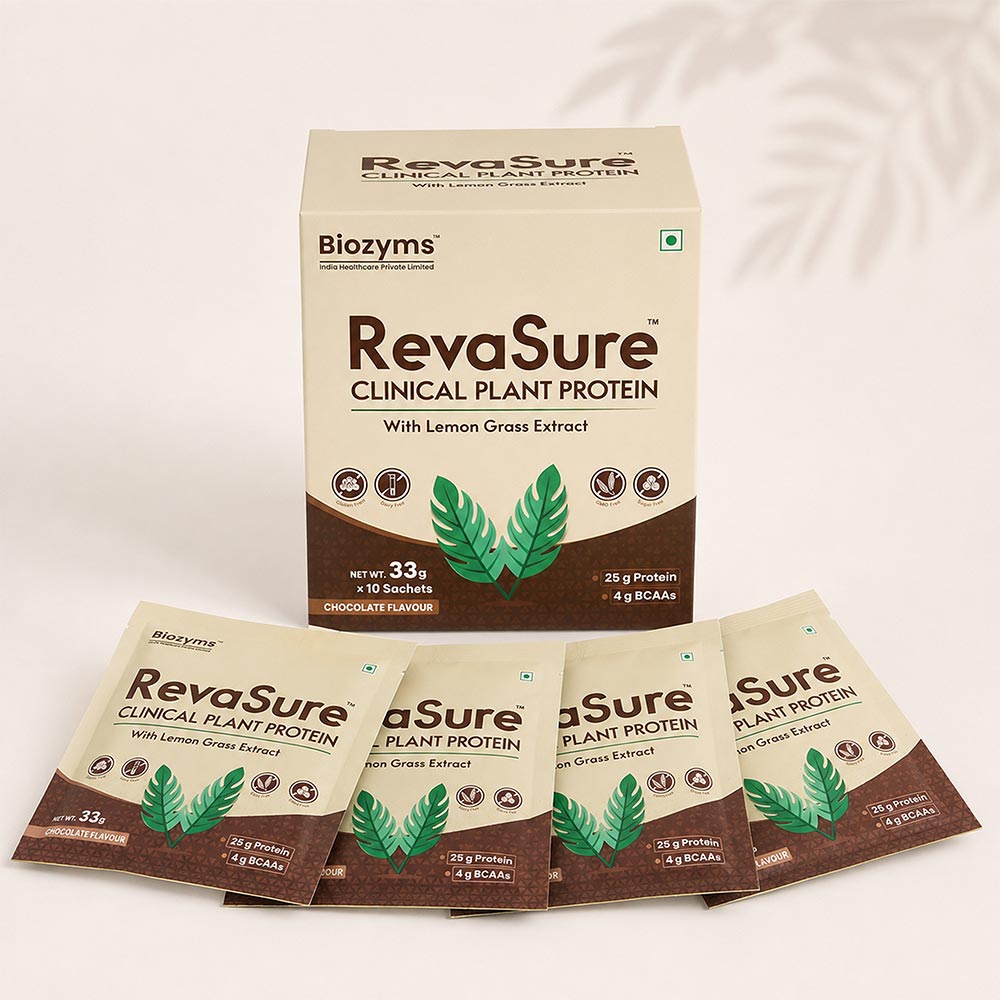
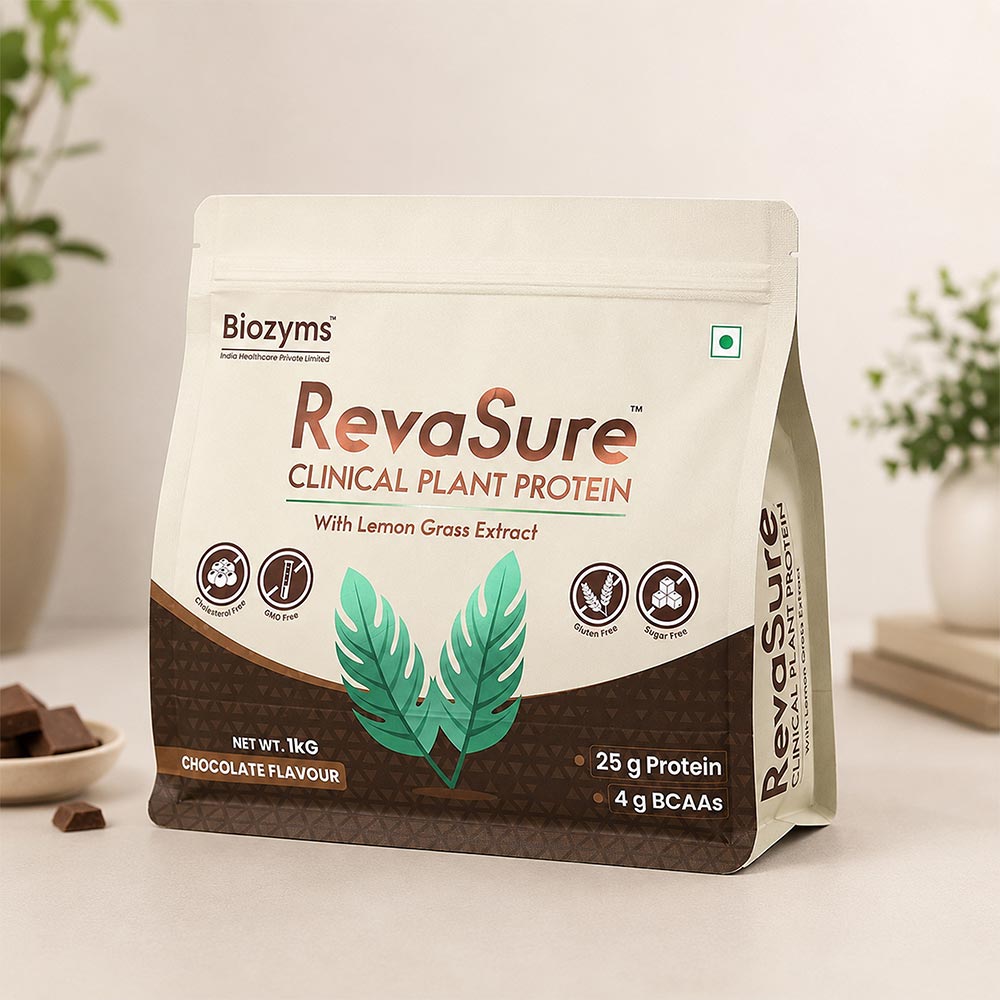
RevaSure works with lemongrass in roughly this spirit — as part of the broader formulation, not as a headline feature standing on its own.
The brand's wider position is that protein doesn't need to live exclusively inside gym culture or belong only to athletes and fitness enthusiasts. Nutrition doesn't begin in the gym — it begins in ordinary routines, everyday meals, and small choices people make without necessarily thinking of themselves as "training" for anything.
Within that framing, lemongrass fits because it's grounded in something people already recognise from daily life, not because it's positioned as a breakthrough. It's one part of how RevaSure thinks about building a plant protein product that feels considered rather than assembled — where flavour, familiarity, and formulation are treated as connected decisions rather than separate boxes to tick.
That's the honest way to describe it: lemongrass isn't presented as a miracle addition
here. It's one ingredient among several, chosen for what it contributes to the experience
of the product, not for any unverified claim about what it might do once consumed.
A More Thoughtful Way to Look at Plant Protein
Plant protein is steadily becoming part of ordinary eating, not just a category reserved for post-workout shakes or fitness-first routines. As that shift continues, the ingredients inside these products matter more than ever — not only for what they claim to do, but for how they shape the actual experience of eating or drinking something.
Lemongrass is a useful example of an ingredient that doesn't need to be dramatic to be worth talking about. It's familiar, it's distinctive, and it gives a product something to say about itself beyond the usual protein-per-scoop specifications.
That's really the broader point. Nutrition doesn't begin in the gym, and it doesn't need grand claims to be meaningful. Sometimes it begins with a more thoughtful choice of what goes into the product in the first place — which is the kind of thinking RevaSure brings to its own formulation, lemongrass included.